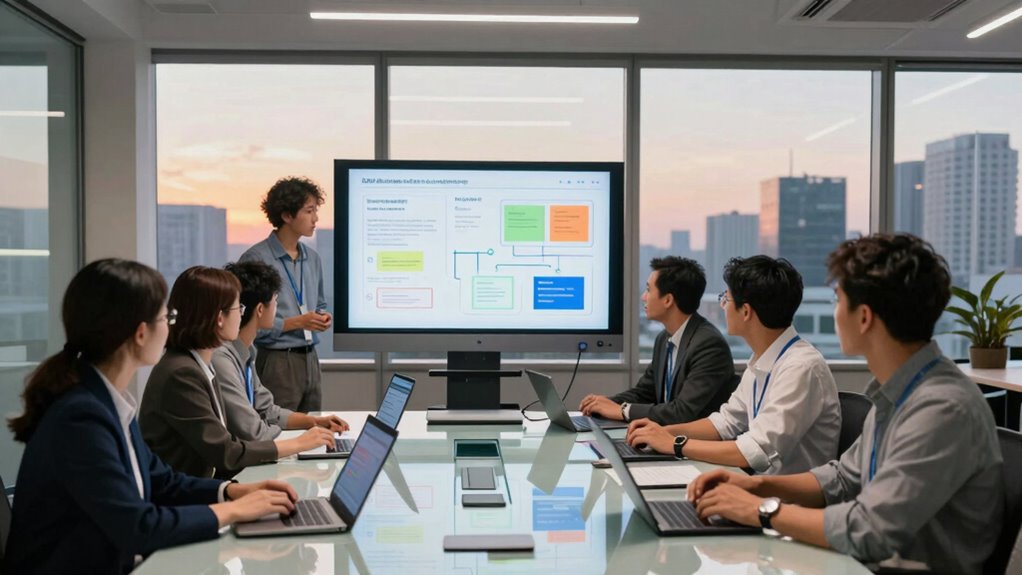

Internal IT teams use service design to create seamless, user-centered experiences that boost employee satisfaction and encourage loyalty. They focus on integrating technology thoughtfully into daily workflows, streamlining onboarding, and offering self-service portals that reduce wait times. By gathering feedback and continuously improving services, you can make systems more intuitive and accessible. This approach shows employees they’re valued and supported, helping to rebuild trust and retention. Explore more ways to turn these strategies into action.
Key Takeaways
- Internal IT teams leverage service design to create seamless, user-centric technology experiences that rebuild trust and engagement.
- They streamline onboarding and self-service portals to reduce frustrations and improve overall employee satisfaction.
- Continuous feedback loops allow IT to refine services, aligning technology with evolving employee needs and expectations.
- Integration of communication, HR, and project tools enhances workflow efficiency, reducing technical barriers.
- Strategic service design demonstrates organizational support, fostering commitment and retention among employees.
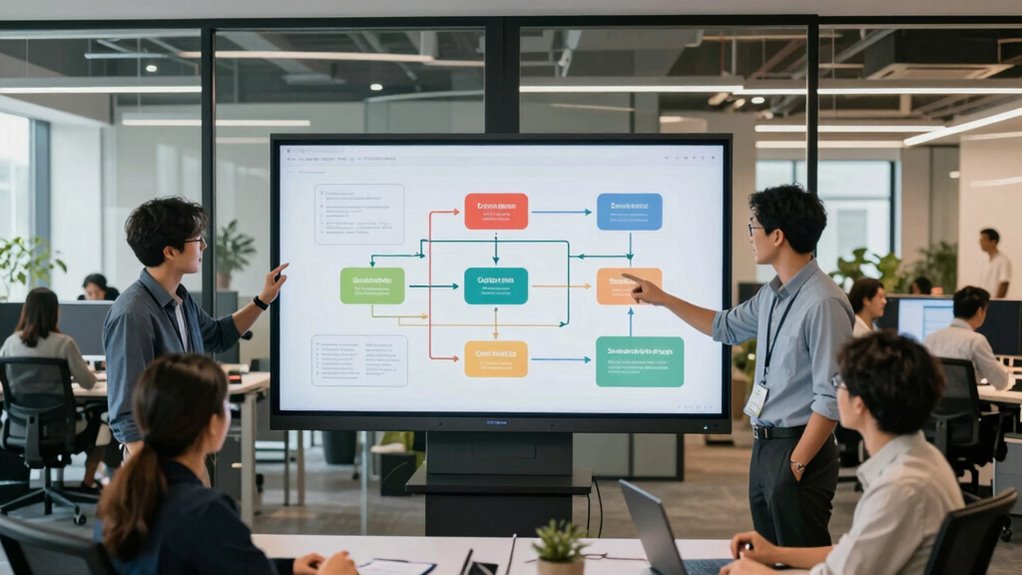
When employees leave, it’s often a sign that something within your organization needs fixing. High turnover isn’t just about losing staff; it’s a warning that your internal environment might be lacking in engagement or failing to meet employee needs. As an internal IT team, you have a crucial role in addressing these issues through strategic service design. By focusing on creating seamless, user-centric technology experiences, you can significantly improve employee engagement and foster a stronger connection to your organization. When employees feel that technology works for them—rather than against them—they’re more likely to stay committed and motivated.
Effective service design boosts employee engagement by making technology intuitive, accessible, and aligned with their needs.
To win back employees, you need to understand their pain points and design services that alleviate frustrations. This means integrating technology thoughtfully into daily workflows, making tools intuitive and accessible. For example, streamlining onboarding platforms or providing self-service portals for common IT requests can reduce wait times and demonstrate that your team values efficiency. When employees see that their technology needs are met swiftly and effectively, it boosts their confidence in your organization’s support system and enhances overall engagement.
Service design isn’t just about deploying new tools; it’s about crafting a holistic experience that aligns with employee expectations. Using a human-centered approach, you gather feedback to identify what’s working and what’s not. This feedback loop helps you refine services to better meet user needs, fostering a sense of involvement and ownership among employees. When they see their input directly influences service improvements, their engagement deepens, and they’re more likely to advocate for the organization. Incorporating user feedback into your processes ensures continuous improvement and aligns services with evolving employee needs. Recognizing the importance of technology integration can further streamline workflows and reduce technical barriers. Additionally, emphasizing user-centered design principles can ensure that services remain intuitive, accessible, and aligned with actual user demands.
Understanding how authenticity in organizational culture influences employee perceptions can help tailor service design to reinforce trust and commitment. Technology integration plays a pivotal role in this process. By integrating various systems—communication platforms, project management tools, HR portals—you create a unified experience that minimizes friction. This integration reduces the cognitive load on employees, allowing them to focus on their core tasks instead of wrestling with incompatible or outdated systems. When technology feels seamless, employees are more productive, happier, and less inclined to seek opportunities elsewhere.
Ultimately, your goal as an IT team is to make technology an enabler, not a barrier. Service design helps you deliver that promise by ensuring every touchpoint is optimized for user satisfaction. When you design services that prioritize employee needs, you send a clear message: your organization values its people and is committed to providing the best possible environment for them to thrive. This approach not only helps win back employees but also builds a resilient, engaged workforce that’s aligned with your organization’s mission and vision. Focusing on natural, user-friendly systems can significantly contribute to this goal by reducing friction and enhancing user experiences.
![Express Schedule Free Employee Scheduling Software [PC/Mac Download]](https://m.media-amazon.com/images/I/41yvuCFIVfS._SL500_.jpg)
Express Schedule Free Employee Scheduling Software [PC/Mac Download]
Simple shift planning via an easy drag & drop interface
As an affiliate, we earn on qualifying purchases.
As an affiliate, we earn on qualifying purchases.
Frequently Asked Questions
How Do Internal IT Teams Measure Success With Service Design?
You measure success with service design by gathering employee feedback and analyzing how well the IT services meet their needs. You create user personas to understand different employee groups, then track improvements in satisfaction, productivity, and adoption rates. If feedback becomes more positive and employees find services easier to use, you’re effectively winning them back. Continuous monitoring of these metrics helps you refine your service design strategies over time.
What Challenges Might Teams Face Implementing Service Design Strategies?
You might face challenges like employee resistance, where staff are hesitant to adopt new service changes, and resource allocation issues, which can strain your team’s capacity to implement strategies effectively. Overcoming employee resistance requires clear communication and engagement, while managing resource constraints demands careful planning and prioritization. Balancing these factors helps guarantee your service design efforts succeed and you regain employee trust and satisfaction.
How Does Service Design Improve Employee Engagement Specifically?
Service design improves employee engagement by focusing on creating a seamless user experience that boosts employee satisfaction. When IT services are intuitive, reliable, and tailored to user needs, employees feel more valued and empowered. This positive experience encourages active participation and loyalty, reducing frustration. As a result, you’ll notice higher morale and productivity, making your organization more attractive to current and potential employees.
Are There Specific Tools or Software Recommended for Service Design?
Think of tools like a compass guiding your journey through service design. You should consider software like ServiceNow or Jira Service Management, which help map the user experience and customer journey. These platforms streamline workflows, gather feedback, and improve service delivery. They act as your navigational tools, ensuring your internal IT services are aligned with employee needs, making their experience smoother and more engaging.
How Long Does It Typically Take to See Results From Service Design Efforts?
Results from service design efforts typically show within three to six months. As you gather employee feedback and implement process optimization, you’ll notice improvements in employee satisfaction and engagement. It takes time for changes to take effect, so stay patient and consistent. Regularly reviewing feedback helps you refine services, ensuring your internal IT team effectively wins back employees by addressing their needs and streamlining processes.

The KISS Theory of Employee Onboarding: Keep It Strategically Simple "A simple approach to personal and professional development."
As an affiliate, we earn on qualifying purchases.
As an affiliate, we earn on qualifying purchases.
Conclusion
As you harness the power of service design, you’re not just improving processes—you’re transforming the very experience your employees have. But the real breakthrough? It’s just around the corner. By continuously refining your approach, you’ll uncover unexpected insights that could redefine your team’s future. Are you ready to take that next step? Because what awaits on the other side might just surprise you—and change everything you thought you knew about employee engagement.
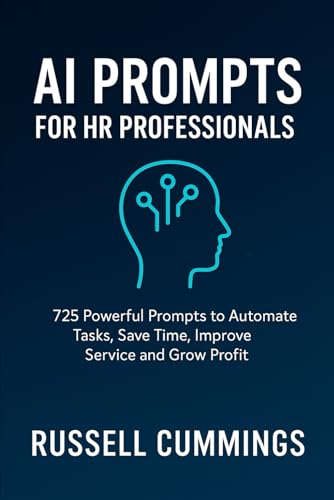
AI Prompts for HR Professionals: 725 Powerful Prompts to Automate Tasks, Save Time, Improve Service and Grow Profit (AI prompts for Business Success – Industries and Professions Series)
As an affiliate, we earn on qualifying purchases.
As an affiliate, we earn on qualifying purchases.

Feedback Reimagined: Transform Your Organization through POSITIVE PSYCHOLOGY and SOCIAL SUPPORT
As an affiliate, we earn on qualifying purchases.
As an affiliate, we earn on qualifying purchases.