📊 Full opportunity report: Postpartum Recovery Tips Tailored To Your Delivery Type on IdeaNavigator AI — validation score, market gap, and execution plan.

Get business pricing on monitors, keyboards and dev gear
- Business-only prices and quantity discounts
- Tax-exempt purchasing
- Multiple users, one account, clear invoices
TL;DR
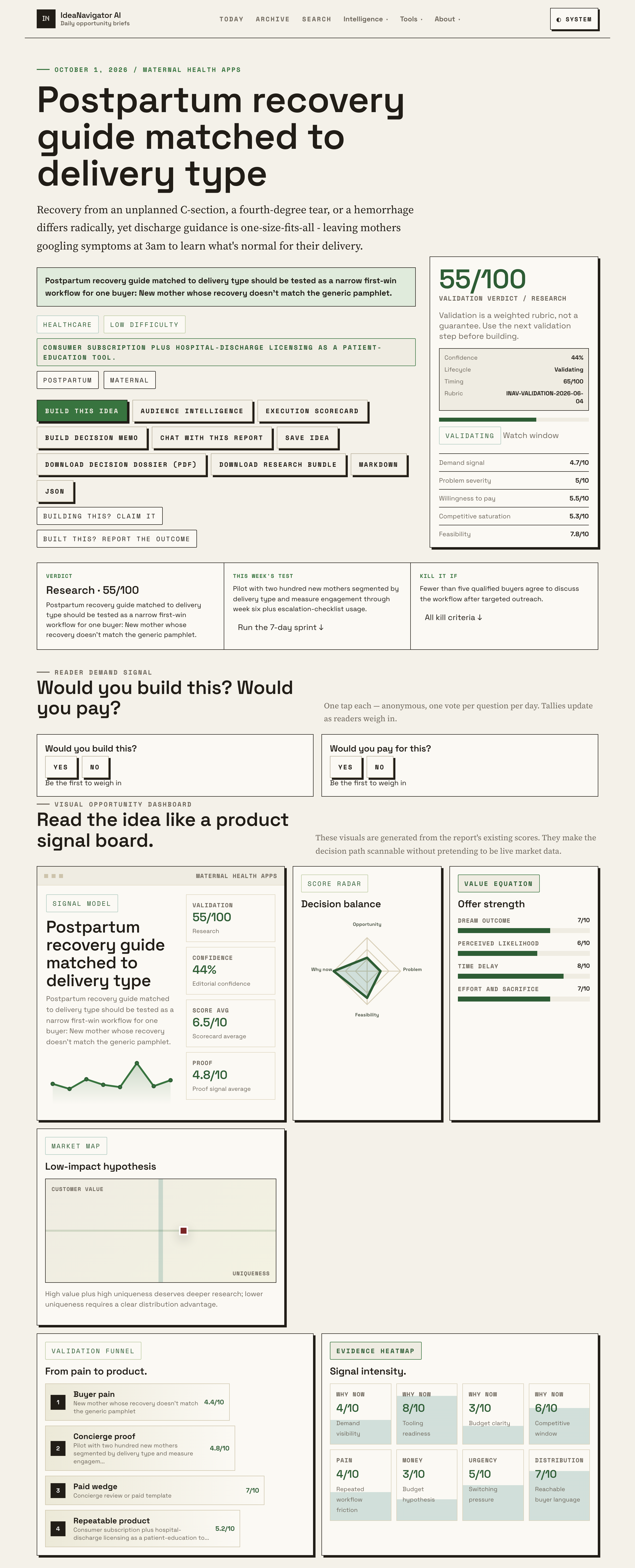
IdeaNavigator AI has outlined a proposed postpartum recovery guide tailored to delivery type and complications. The concept remains untested; its proposed pilot would track engagement and use of warning-sign checklists among 200 new mothers through week six.
IdeaNavigator AI has proposed a pilot of a postpartum recovery guide that would tailor information to a mother’s delivery type, interventions and complications. The concept aims to address gaps in generic discharge materials, similar to the focus on postpartum recovery check-ins, but it has not been reported as a launched or clinically validated product.
According to the IdeaNavigator AI proposal, the guide would begin with an intake covering mode of delivery, interventions, complications and feeding. It would then provide week-by-week recovery expectations matched to that profile, along with warning-sign checklists and summaries to help prepare for the six-week postpartum visit. The proposal describes these features as a minimum viable product; it provides no prototype results or clinical review.
IdeaNavigator AI proposes testing the concept with 200 new mothers segmented by delivery type. The suggested measures are engagement through the first six weeks and use of the escalation checklists. The outline does not report a recruitment plan, pilot dates, a comparison group or results.
The proposal suggests a consumer subscription combined with licensing to hospitals as a patient-education tool. These are proposed routes to market, not evidence of existing customers, revenue or hospital partnerships.
Recovery Guidance by Delivery Profile
Postpartum recovery needs can vary with the course of delivery. The IdeaNavigator AI proposal identifies an unplanned C-section, a fourth-degree tear and hemorrhage as examples of circumstances that may make a generic recovery handout feel poorly matched. A guide organized around a patient’s actual delivery could make relevant expectations and warning signs easier to find.
The idea also raises a practical question for maternal care: whether tailored educational material can help patients prepare for follow-up and recognize when to seek help. The proposed pilot’s engagement and checklist-use measures could indicate whether mothers use the tool, but those measures alone would not show that it improves health outcomes or replaces advice from clinicians.
postpartum recovery guide for C-section
As an affiliate, we earn on qualifying purchases.
As an affiliate, we earn on qualifying purchases.
From Discharge to Six-Week Follow-Up
The IdeaNavigator AI proposal says postpartum care is receiving renewed clinical attention and refers broadly to newer guidance calling for individualized follow-up. It does not identify a specific guideline, issuing organization or publication date, so the claim cannot be tied to a particular policy change.
The proposal’s central premise is that discharge instructions may not account for meaningful differences in delivery and complications. The proposed product would carry those details into week-by-week education and preparation for the six-week visit. The outline names no specific hospital, care system or existing app as a partner or comparator.
postpartum warning sign checklists
As an affiliate, we earn on qualifying purchases.
As an affiliate, we earn on qualifying purchases.
Evidence and Safety Still Needed
The IdeaNavigator AI outline reports no pilot and provides no evidence about accuracy, safety, clinical effectiveness or whether the guide would improve access to care. It also does not explain who would review the medical content, how often it would be updated or how urgent symptoms would be routed to professional care.
The proposal does not specify which patients and delivery profiles the first version would cover, how the product would protect sensitive health information or whether hospitals would license it. Engagement and checklist use are proposed measures; they would not establish that the guide prevents complications or leads to earlier treatment.
postpartum care books for new mothers
As an affiliate, we earn on qualifying purchases.
As an affiliate, we earn on qualifying purchases.
Pilot Design and Clinical Review
IdeaNavigator AI names validation with a 200-mother pilot as the next proposed step, tracking engagement through week six and use of escalation checklists across delivery-type groups. The outline announces no start date or recruitment details. Before a pilot could establish more than user interest, its organizers would need to define the guide’s clinical review process, safety boundaries and outcome measures.
Results could help determine whether mothers find tailored guidance useful and whether a consumer subscription or hospital licensing model merits further development. Until such evidence is available, the guide remains a product proposal rather than a tested postpartum care intervention.
Source: IdeaNavigator AI
As an affiliate, we earn on qualifying purchases.
Key Questions
Is the postpartum recovery guide available now?
The IdeaNavigator AI proposal describes a product concept and a possible pilot. It does not say that the guide has launched or is available to patients.
What would the guide tailor to each mother?
According to the proposal, its intake would capture delivery mode, interventions, complications and feeding. The guide would use those details to shape week-by-week expectations, warning-sign checklists and preparation for the six-week visit.
How would the idea be tested?
The proposal outlines a pilot involving 200 new mothers segmented by delivery type. It would track engagement through week six and use of escalation checklists; no results or schedule have been provided.
Has the guide been shown to improve health outcomes?
The IdeaNavigator AI outline reports no outcome evidence. The proposed engagement measures could show whether participants use the guide, but would not by themselves establish clinical benefit.
Source: IdeaNavigator AI
Fall Picks
fall essentials
As an affiliate, we earn on qualifying purchases.