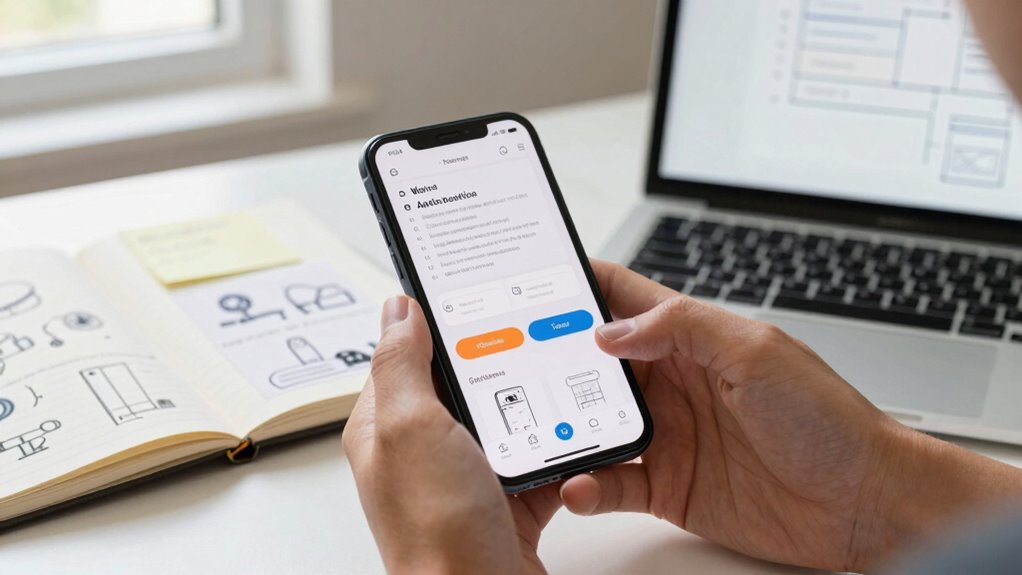

To test your service idea without building the full service, start by conducting market research to identify gaps and trends. Engage with potential customers through surveys or interviews to gather feedback on their challenges and needs. Perform competitor and technology analysis to understand the landscape. Focus on early validation by creating simple prototypes or landing pages to gauge interest. This approach helps you confirm genuine demand and refine your idea before investing heavily. Keep exploring to learn more effective validation methods.

Get business pricing on monitors, keyboards and dev gear
- Business-only prices and quantity discounts
- Tax-exempt purchasing
- Multiple users, one account, clear invoices
Key Takeaways
- Conduct customer interviews to gather direct feedback on needs and preferences before developing the service.
- Use surveys, social media, and online forums to gauge interest and validate demand.
- Create landing pages or prototypes to test user response without full development.
- Perform competitive and market research to identify gaps and potential differentiation.
- Validate ideas through early testing and iterative feedback to refine or pivot before full implementation.
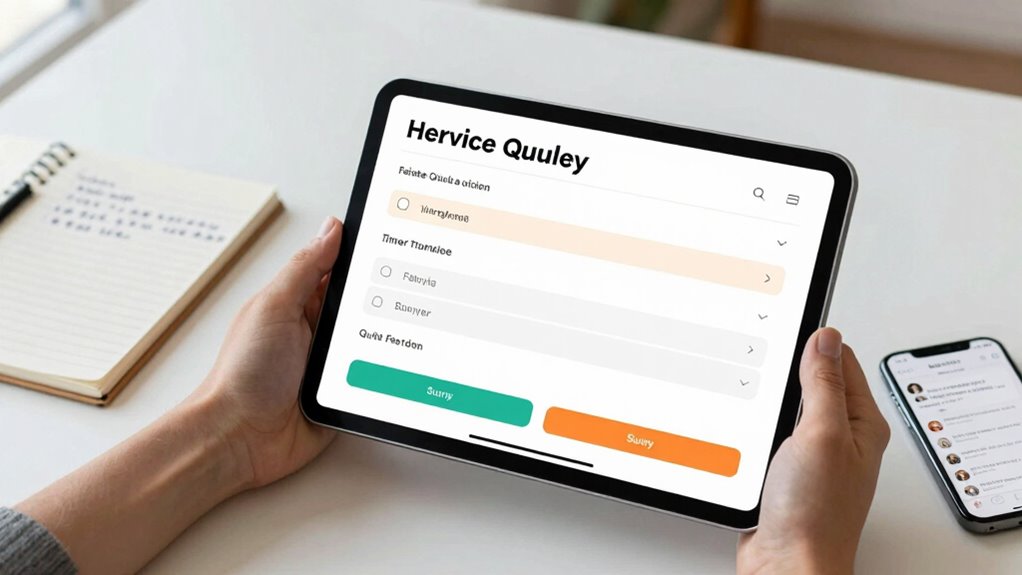
Ever wondered if your service idea has real potential before investing too much time and money? The key is to test your concept early and efficiently. You don’t need to build the entire service right away. Instead, focus on gathering insights through market research and customer interviews. These steps help you understand if there’s a genuine demand and how your target audience might respond to your idea.
Start with market research. This isn’t just about browsing online or reading industry reports—it’s about digging deep to identify gaps, trends, and existing competitors. Look for what’s missing in the market and whether your idea can fill that void. Use surveys, online forums, and social media to gauge interest. The goal is to validate that enough people have a problem you can solve, and they’re actively seeking solutions. Market research helps you refine your idea, ensuring it aligns with real market needs rather than assumptions. Paying attention to media literacy can help you interpret trends and misinformation that may influence market perceptions. Conducting thorough competitive analysis can further clarify where your service fits within the current landscape. Additionally, understanding different technologies used in related fields can help you identify potential innovations or limitations early on. Recognizing the role of energy efficiency in appliances, for example, can inspire service features that emphasize sustainability and cost savings.
Deep dive into market research by exploring gaps, trends, and competitors to validate real demand and refine your idea.
Next, conduct customer interviews. These are direct conversations with potential users of your service. Reach out to people who fit your target demographic and ask open-ended questions. Find out what challenges they face, what solutions they’ve tried, and what they value most in a service like yours. Customer interviews give you qualitative insights that surveys often can’t reveal. They help you understand not just if people are interested, but how they’d prefer to use your service, what features matter most, and what objections they might have.
As you gather this feedback, look for common themes and signals of genuine interest. If many people express similar pain points and show excitement for your solution, it’s a strong indicator your idea has potential. If most responses are lukewarm or negative, it’s a sign to pivot or rethink your approach before investing heavily.
This process of early validation saves you time and resources. By focusing on market research and customer interviews, you avoid building a service no one wants. Instead, you create a foundation based on real demand, increasing your chances of success. Remember, testing your service idea doesn’t mean you have to have a finished product—just enough to validate whether your concept is worth pursuing further. With these steps, you can confidently move forward, knowing you’re addressing a real need rather than guessing at what might work.
As an affiliate, we earn on qualifying purchases.
Frequently Asked Questions
How Much Does Testing a Service Idea Typically Cost?
Testing a service idea usually costs between a few hundred to a few thousand dollars, depending on your approach. You can keep costs low by doing market research and competitor analysis yourself, using online surveys, and creating simple prototypes. Investing in targeted customer interviews or small-scale pilot programs can also provide valuable insights without breaking the bank. The key is to focus on gathering real feedback efficiently and affordably.
What Tools Are Best for Initial Service Testing?
You can’t afford to ignore the power of tools like surveys, landing pages, and mockups for initial service testing. Use market research platforms like Typeform or SurveyMonkey to gather quick feedback, and create simple prototypes with tools like Figma or InVision to visualize your idea. These tools let you test assumptions, gauge interest, and refine your service concept—saving you from costly full-scale development. Don’t wait—start testing today!
How Do I Measure Success in Early Service Tests?
You measure success in early service tests through market validation and user engagement. Track how many users show interest, sign up, or give positive feedback to validate demand. Monitor engagement metrics like time spent, repeat visits, or interactions to gauge interest and usability. If users respond positively and metrics align with your goals, your service idea shows promise. Adjust based on insights, ensuring you’re meeting actual needs before full-scale development.
Can I Test a Service Idea Without Customer Feedback?
Yes, you can test a service idea without direct customer feedback by conducting market research and competitor analysis. Market research helps you understand industry trends and potential demand, while competitor analysis reveals what others offer and gaps you can fill. These methods allow you to validate your idea‘s viability, refine your concept, and make informed decisions without needing immediate customer input. This approach saves time and resources early on.
How Long Should Initial Service Testing Take?
You should aim for initial service testing to last about 2 to 4 weeks. During this time, conduct market research and competitive analysis to gather insights quickly. Engage a small, targeted customer group, and observe their interactions. This period allows you to identify key pain points, refine your approach, and decide if your service meets market needs before investing heavily in full development.
landing page builder for startups
As an affiliate, we earn on qualifying purchases.
As an affiliate, we earn on qualifying purchases.
Conclusion
Testing your service idea without building the entire thing is a game-changer—you’ll save time, money, and countless headaches. By using quick, low-cost methods like surveys, prototypes, or landing pages, you can gather invaluable feedback and refine your concept. Think of it as a secret weapon that’s more powerful than a supercomputer in predicting success. So, don’t wait for perfection—start testing today and turn your idea into a thriving reality faster than you ever imagined!
As an affiliate, we earn on qualifying purchases.
As an affiliate, we earn on qualifying purchases.
Fall Picks
fall essentials
As an affiliate, we earn on qualifying purchases.