
📊 Full opportunity report: Software-Defined Warfare: How Ukraine’s Delta Turned the Battlefield Into a Shared, Real-Time Map on ThorstenMeyerAI.com — validation score, market gap, and execution plan.

Get business pricing on monitors, keyboards and dev gear
- Business-only prices and quantity discounts
- Tax-exempt purchasing
- Multiple users, one account, clear invoices
TL;DR
Ukraine has deployed Delta, a cloud-based, browser-accessible battlefield management system, marking a shift toward software-defined warfare. It fuses multiple data sources for real-time situational awareness, giving Ukrainian troops a strategic advantage.
Ukraine has officially deployed Delta, a cloud-based, browser-accessible battlefield management system, to enhance real-time situational awareness and command coordination amid ongoing conflict. This development marks a significant shift toward software-defined warfare, leveraging commodity hardware and cloud infrastructure to improve battlefield responsiveness and resilience.
Delta is a collaborative effort between Ukraine’s military, the NGO Aerorozvidka, the Defense Ministry’s innovation center, and the Ministry of Digital Transformation. It integrates inputs from drones, satellites, sensors, and civilian reports into a unified, geolocated map accessible via standard devices like phones and laptops. The system’s backend is hosted outside Ukraine to protect against missile strikes and cyberattacks, enabling secure, continuous operation.
By consolidating multiple data streams into a shared operational picture, Delta shortens the decision-making cycle, allowing Ukrainian units to identify and respond to threats more rapidly. During the early counteroffensive near Kyiv, Ukrainian officials claimed Delta helped identify approximately 1,500 enemy targets daily, though these figures are self-reported and unverified independently. The system also supports planning, coordination, and secure communication across dispersed units.
Software-defined warfare: how Ukraine’s Delta turned the battlefield into a shared, real-time map
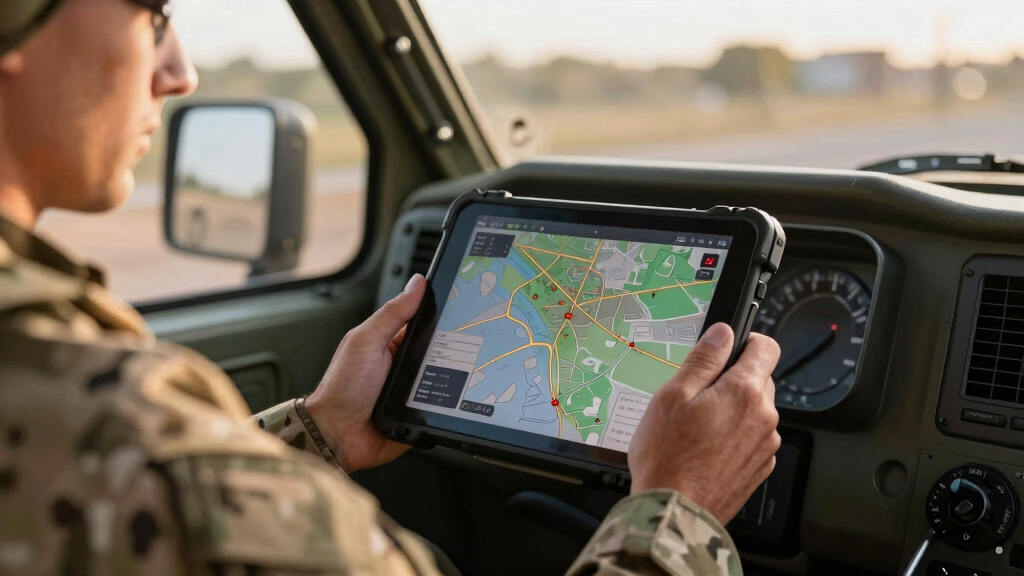
A soldier opens a browser and sees the fused war — drones, satellites, sensors and vetted reports on one live map. The backend is a cloud deliberately hosted abroad so a missile can’t take it down. The clearest case yet of treating warfare as software.
Optical sensors go blind in cloud & dark; an all-weather SAR radar layer — the kind VigilSAR produces — slots into a picture like this as one resilient, sovereign input. vigilsar.com · And note the paradox: to survive missiles & cyberattack, Ukraine hosted its crown-jewel cloud outside its own borders — trading physical sovereignty for operational survivability. Resilience through distribution.
Delta’s lasting lesson isn’t a piece of software — it’s a model of how to build: commodity clients, cloud backend, open standards, relentless iteration, fusion over hardware, and resilience through distribution. It’s why a wartime NGO out-shipped procurement bureaucracies on a fraction of the budget. The platform mattered less than the picture — and the picture is software. Own the fusion layer, own the sovereign feeds into it, and get it to the edge.
Implications of Ukraine’s Cloud-Hosted Battlefield System
The deployment of Delta demonstrates a strategic shift in military technology, emphasizing software and data over traditional hardware platforms. Its cloud-native architecture and browser-based interface allow broader access and faster updates, reducing reliance on costly, proprietary military hardware. This approach enhances Ukraine’s operational resilience and could influence future military modernization efforts worldwide, especially in conflict zones where rapid adaptation and secure data sharing are critical.
Popular right now

Shark IQ Robot Self-Empty XL Robot Vacuum with Home Mapping, Self-Cleaning Brushroll, and Wi-Fi, Black

Dreame L50 Ultra Robot Vacuum and Mop Combo

KitchenAid Artisan 5-Quart Tilt-Head Stand Mixer, Blue Velvet
As an affiliate, we earn on qualifying purchases.
Origins and Development of Ukraine’s Software-Defined Warfare Approach
The concept of software-defined warfare in Ukraine traces back to a 2017 NATO initiative aimed at breaking down information silos inherited from Soviet-era military structures. Ukraine’s collaboration with NGOs, digital transformation agencies, and defense innovation units accelerated the development of adaptable, software-centric systems like Delta. This approach contrasts sharply with traditional defense IT, which often relies on bespoke, hardware-dependent solutions, and reflects a broader trend toward agility and interoperability in modern military operations.
“Delta is a game-changer in battlefield management, enabling real-time coordination across dispersed units with unprecedented speed and security.”
— Mykhailo Fedorov, Ukraine’s Minister of Digital Transformation
Unverified Claims and Operational Security Considerations
While Ukrainian officials report that Delta helped identify around 1,500 enemy targets daily, these figures are self-reported and lack independent verification. Details about the system’s integration with drone operations and the full extent of its battlefield impact remain classified or undisclosed, leaving some aspects of its operational effectiveness uncertain.
Next Steps in Delta’s Deployment and Development
Ukraine plans to expand Delta’s use across more frontlines and incorporate additional data sources, such as synthetic aperture radar feeds. Further technical details and operational results are expected to emerge as the system matures. International interest in adopting similar software-centric battlefield management approaches is also likely to grow, potentially influencing future military modernization strategies.
Key Questions
How does Delta improve battlefield coordination?
Delta consolidates inputs from drones, satellites, sensors, and civilian reports into a unified, geolocated map, enabling faster decision-making and targeted operations.
Why is hosting Delta’s cloud outside Ukraine significant?
Hosting the system externally protects it from missile strikes and cyberattacks, ensuring continuous operation during intense conflict.
Can other countries adopt similar systems?
Yes, the modular, cloud-based architecture of Delta offers a model for other militaries seeking flexible, resilient battlefield management solutions.
What are the limitations of Delta’s current deployment?
Some operational details remain classified, and the actual effectiveness of the system in combat scenarios is still being evaluated through ongoing use.
What does this development mean for future warfare?
It signals a shift toward software-driven, data-centric military operations that prioritize rapid sharing, adaptability, and resilience over traditional hardware reliance.
Source: ThorstenMeyerAI.com