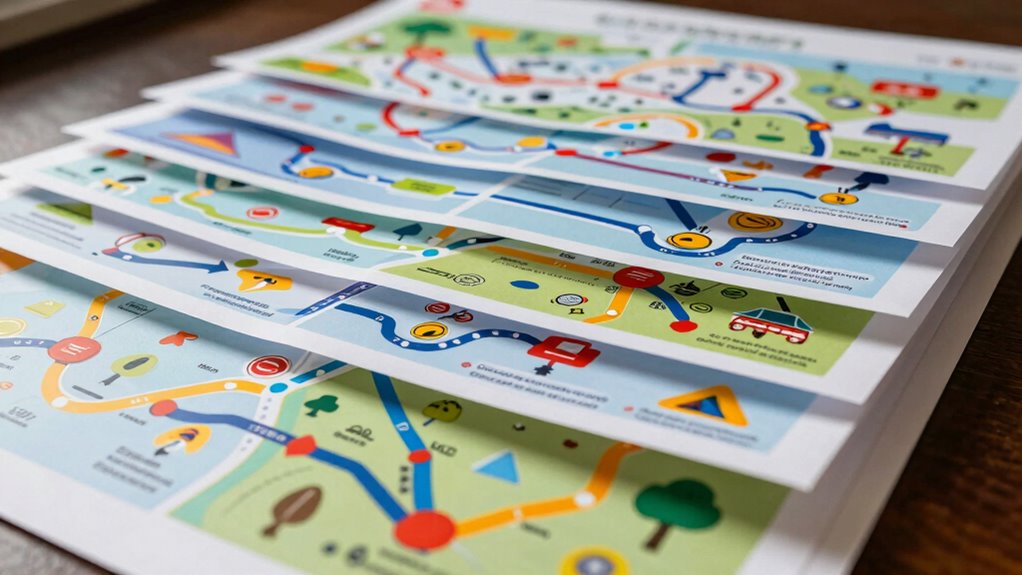

When one customer journey isn’t enough, layered journey maps give you a fuller picture of your customers’ experiences. They help you visualize multiple emotions, touchpoints, and motivations happening across channels, revealing hidden pain points and opportunities. By combining various data sources and incorporating layers like emotional states, you gain deeper insights and foster empathy. This approach guarantees you understand complex behaviors and continuously improve how your brand connects. Keep exploring to discover how these maps can transform your strategy.

Get business pricing on monitors, keyboards and dev gear
- Business-only prices and quantity discounts
- Tax-exempt purchasing
- Multiple users, one account, clear invoices
Key Takeaways
- Layered maps capture multiple customer perspectives and emotions, providing a comprehensive view beyond a single journey.
- They reveal hidden pain points and opportunities that may be missed with linear, one-dimensional maps.
- Using layers like motivations and frustrations helps prioritize improvements for complex customer experiences.
- Incorporating diverse data sources ensures a richer, more accurate understanding of varied customer behaviors.
- Iterative updates keep layered maps relevant, reflecting evolving customer needs and multiple journey scenarios.
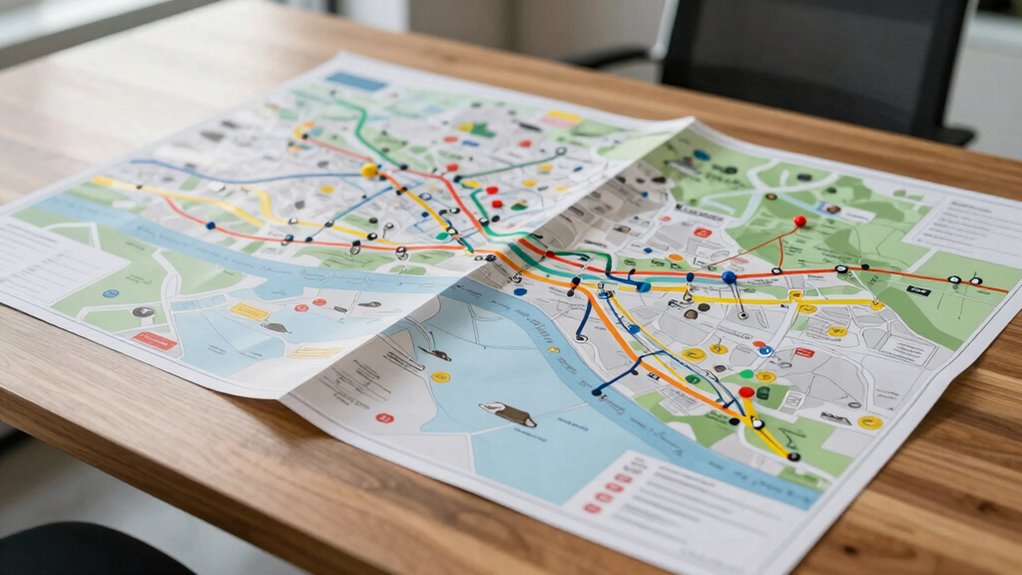
Layered journey maps are a powerful tool for understanding and improving customer experiences by visualizing multiple dimensions of their interactions. When you explore this approach, you’re not just tracking steps; you’re capturing emotions, motivations, and touchpoints across various channels. This depth helps you develop customer empathy, allowing you to see the world from your customers’ perspectives. By layering different aspects of their journey, you gain a detailed view that reveals pain points and opportunities that might be invisible in a simple, linear map.
Layered journey maps uncover hidden customer insights by visualizing emotions, motivations, and touchpoints across multiple channels.
In practice, you’ll use a variety of mapping techniques to build these layered maps. For example, a basic timeline may show the sequence of interactions, but adding layers like emotional states or decision drivers gives you richer insight. These layers help you understand why certain behaviors occur and what customers truly value. You might include a layer that illustrates customer frustrations or delights, making it easier to prioritize improvements that genuinely impact satisfaction. This multi-dimensional perspective encourages you to think beyond individual touchpoints and see the interconnected flow of experiences. Additionally, incorporating diverse data sources ensures a more comprehensive understanding of the customer journey, and understanding the importance of color accuracy can be crucial when mapping visual or multimedia elements of the experience.
The key to effective layered journey mapping lies in your ability to synthesize different data sources. You’ll gather feedback through surveys, interviews, and behavioral analytics, then overlay this information onto your maps. Each layer serves as a lens, highlighting specific facets of the customer experience. By doing so, you can identify not just what happens, but why it happens, and how different elements influence overall perception. This detailed view enables you to craft more targeted solutions, fostering a deeper customer empathy that guides your decision-making. Moreover, integrating insights from emerging fields like biohacking can help optimize how teams work and improve overall service delivery. Recognizing the role of data integration can significantly enhance the accuracy and usefulness of your layered maps, especially when consolidating information from various sources.
Using layered journey maps also helps you communicate complex insights clearly to your team. Instead of overwhelming them with raw data, you can present a visual story that captures multiple dimensions of the customer experience at once. This clarity drives collaboration and keeps everyone aligned on priorities. As you refine these maps, remember that they are living documents—continually updated with new insights and evolving customer needs. The layered approach ensures you’re always viewing the customer journey from multiple angles, making your efforts to enhance their experience more strategic and effective.
Ultimately, layered journey maps transform how you understand and address customer needs. Instead of relying on a single, flat view, you embrace complexity, empathy, and detailed mapping techniques to create a more nuanced picture. This approach empowers you to design experiences that truly resonate, turning customer insights into meaningful improvements that foster loyalty and satisfaction. Incorporating long-term adaptable structures ensures your mapping efforts remain relevant and flexible as customer behaviors evolve, especially when considering potential shifts in customer preferences over time.
customer journey mapping software
As an affiliate, we earn on qualifying purchases.
As an affiliate, we earn on qualifying purchases.
Frequently Asked Questions
How Do Layered Journey Maps Improve Customer Experience?
Layered journey maps improve your customer experience by revealing emotional insights at each touchpoint, helping you understand how customers feel throughout their interactions. They also enable cross-channel integration, ensuring a seamless experience regardless of the platform or device your customers use. By visualizing multiple journey layers, you can identify pain points and opportunities more effectively, allowing you to tailor your approach and foster stronger connections with your customers.
What Tools Are Best for Creating Layered Journey Maps?
You should consider tools like Smaply, UXPressia, or Microsoft Visio for creating layered journey maps. These tools excel in customer segmentation and data visualization, helping you visualize complex customer journeys effectively. They allow you to layer multiple journeys, identify pain points, and tailor experiences. By using these tools, you gain clearer insights into different customer segments, enabling you to craft more personalized, impactful experiences.
How Do You Prioritize Which Layers to Include?
Think of prioritizing layers like a chef choosing ingredients for a signature dish. You start with core customer segmentation, focusing on the most impactful groups. Use data visualization to identify pain points and opportunities. Include layers that reveal the most significant differences in behaviors or needs, ensuring your map captures the full story without overwhelming. This way, your layered journey maps become powerful tools, guiding targeted improvements effectively.
Are Layered Journey Maps Suitable for All Industries?
Layered journey maps are suitable for many industries, but their applicability depends on sector differences and complexity. You’ll find them most valuable in sectors like healthcare or finance, where customer interactions are multi-faceted. However, in simpler industries, a single journey map might suffice. Consider your industry’s complexity and customer touchpoints to determine if layered maps will provide actionable insights and enhance your understanding of customer experiences.
How Often Should Layered Journey Maps Be Updated?
Think of your layered journey maps as a garden that needs tending. You should update them regularly, perhaps quarterly or after significant customer feedback and data analysis. Like watering plants, consistent updates keep your maps relevant and vibrant. Customer feedback reveals new growth, while data analysis highlights areas needing attention. By staying attentive and proactive, you guarantee your maps evolve with your customers’ changing needs, fostering deeper engagement.
emotional customer feedback survey tools
As an affiliate, we earn on qualifying purchases.
As an affiliate, we earn on qualifying purchases.
Conclusion
In the world of layered journey maps, mastering the method means more meaningful moments and better business. By blending bold insights with balanced visuals, you bring customer experiences to life like never before. Remember, refining your approach fosters future-focused, fabulous findings. So, stay strategic, stay savvy, and keep shaping sensational stories that serve your customers better. With layered maps, you’re not just tracking; you’re transforming every touchpoint into a triumphant, tailored triumph.
behavioral analytics tools for businesses
As an affiliate, we earn on qualifying purchases.
As an affiliate, we earn on qualifying purchases.
visualization tools for customer experience
As an affiliate, we earn on qualifying purchases.
As an affiliate, we earn on qualifying purchases.
Halloween Picks
halloween
As an affiliate, we earn on qualifying purchases.